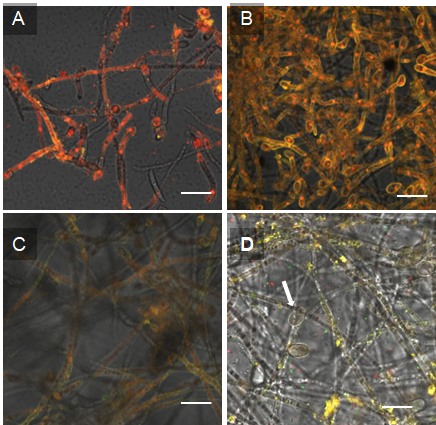
The diverse spectrum of pigments possessed by cyanobacteria, which are easily recognized by their characteristic blue-green colouring, enables them to exhibit a multitude of colors and hence adapt and flourish in a wide range of biological habitats. This study compares the physiological and physiochemical characteristics of isolated cyanobacteria strains procured from the Department of Microbiology, Chaudhary Charan Singh University (CCSU), Meerut. Physiological factors that were investigated include growth rates and pigment composition. These properties were assessed using spectrophotometry, growth curves, and standardized biochemical assays. The results indicated significant variations in the physiological traits of the cyanobacterial strains. Seven cyanobacterial strains were examined to analyze physiological parameters. The identified strains include species of Nostoc, Anabaena, Westiellopsis, Oscillatoria, Tolypothrix, Calothrix, and Phormidium. These strains were cultivated in BG-11 medium, and their pigment levels were analyzed at 7 th, 14 th, 21 st, and 28 th intervals throughout incubation. Distinguishable differences were seen among the different strains of these pigments. Maximum Chlorophyll, Carotenoid, Phycocyanin (PC), Protein, and Carbohydrate content was observed in Anabaena sp. on the 14 th day of incubation, whereas Tolypothrix sp. showed a maximum amount of Allophycocyanin (APC) and Phycoerythrin (PE). This thorough comparison of physiological data sheds light on cyanobacteria’s adaptation mechanisms and possible uses in biotechnology. Comprehending the varied physiological characteristics of these strains may have consequences for bioremediation, environmental management, and the creation of innovative biotechnological instruments across multiple sectors.